
Guocong Zhai (翟国聪)
Causal decision-making for safe systems: what safety policies actually work, and why people choose the mobility options they do.
I am an Assistant Professor in the School of Transportation and Logistics at Southwest Jiaotong University. I received my Ph.D. in Transportation Engineering from Old Dominion University, USA (advisor: Dr. Kun Xie, Transportation Informatics Lab), and was a Research Fellow at the National University of Singapore (mentors: Dr. Prateek Bansal, BeCoS Lab, and Dr. Ghim Ping Raymond Ong). I am Principal Investigator of the NSFC Young Scientists Fund (2026–2028) and the Ministry of Education Overseas Postdoctoral Talent Program (2027–2029).
News
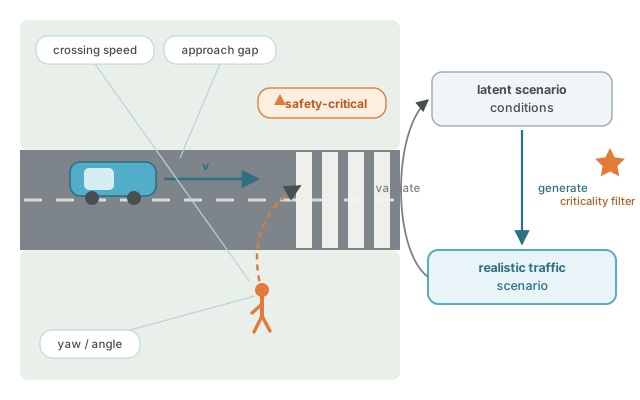
- 2026 — “Generating realistic safety-critical scenarios for vehicle–pedestrian interactions” published in Transportation Research Part C.
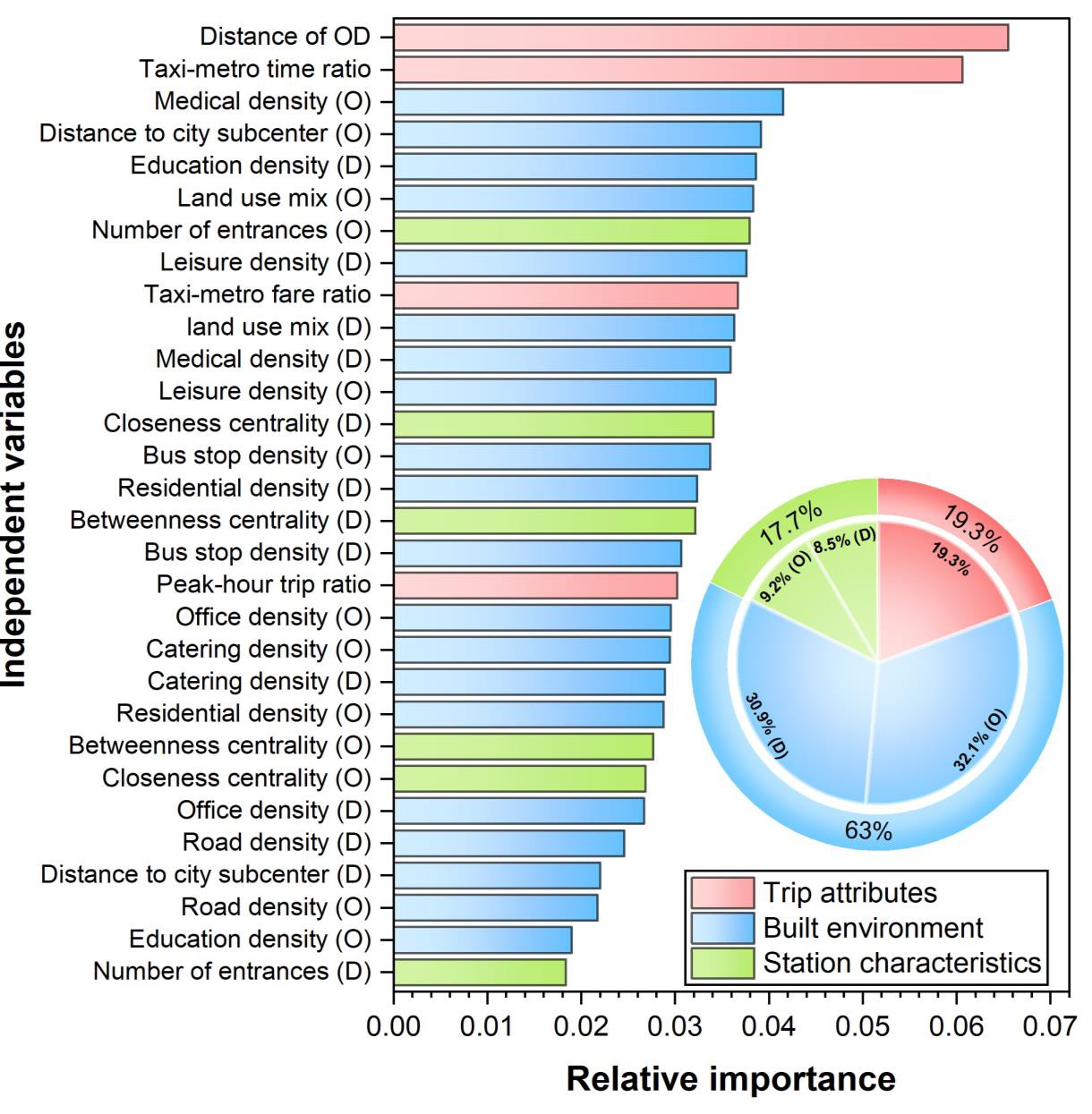
- 2026 — “Modeling taxi-metro competition: Uncovering nonlinear influences of trip and built environment factors” published in Transportation Research Part D.
- 2026 — “Causal inference in conjoint analysis: Logit models vs. potential outcomes” published in the Journal of Choice Modelling.
- 2026 — “Choice preferences for urban air mobility: A latent class discrete choice model with mixed logit extensions” published in Travel Behaviour and Society.
- 2026 — “Exploring different patterns of bike-and-ride trips and influencing factors” published in Travel Behaviour and Society.
- 2025 — Awarded the NSFC Young Scientists Fund as Principal Investigator (2026–2028).
- 2025 — Selected for the Ministry of Education Overseas Postdoctoral Talent Program (2027–2029).
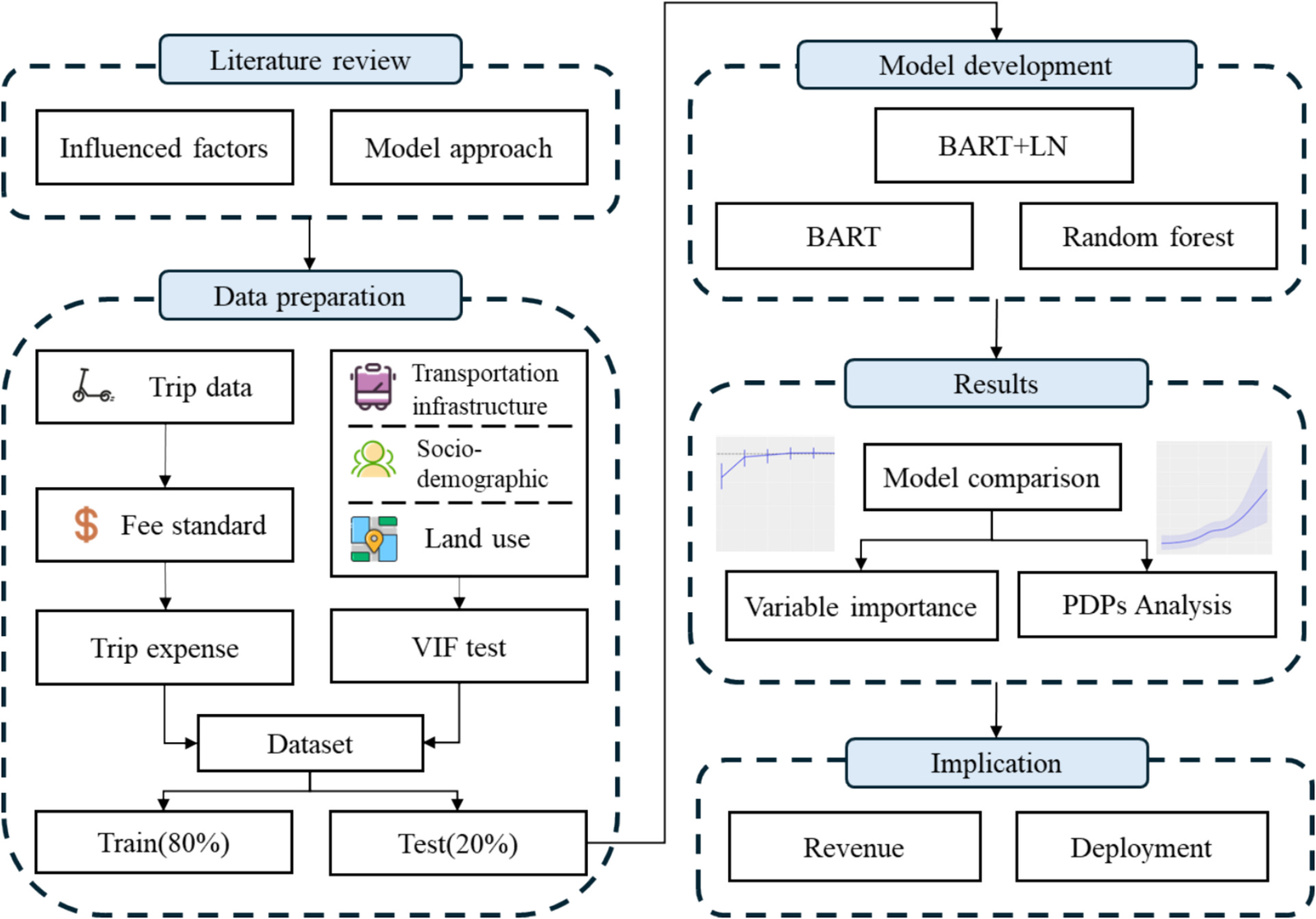
- 2025 — “Built environment impacts on zonal shared e-scooter expenses: A Bayesian learning approach” published in Transportation Research Part D.
- 2025 — Joined the School of Transportation and Logistics, Southwest Jiaotong University, as an Assistant Professor.
- 2025 — Serving as Guest Editor for the Transportation Research Part D special issue on “AI-Driven Behavioral Analytics for Sustainable Shared Mobility.”
Selected Publications
Representative work across both themes — figure teasers from the papers. Full list below; see also my Google Scholar profile.
Full publication list (journal articles & working papers)
Journal articles, reverse chronological order:
Pu, Q., Xie, K., Zhu, Y., & Zhai, G. (2027). Generating realistic safety-critical scenarios for vehicle-pedestrian interactions. Transportation Research Part C: Emerging Technologies, 194, 106002. doi
Liu, X., Zhai, G., Yang, H., Wang, D., Zuidgeest, M., Ding, H., & Liu, X. (2026). Modeling taxi-metro competition: Uncovering nonlinear influences of trip and built environment factors. Transportation Research Part D: Transport and Environment, 161, 105637. doi
Wu, Z., Zhai, G., & Bansal, P. (2026). Causal inference in conjoint analysis: Logit models vs. potential outcomes. Journal of Choice Modelling, 59, 100610. doi
Zhang, H., Xue, X., Zhai, G., Yang, H., Lu, X., & Cherry, C. (2026). Choice preferences for urban air mobility: A latent class discrete choice model with mixed logit extensions. Travel Behaviour and Society, 43, 101229. doi
Yang, Z., Zhai, G., Sze, N. N., Ding, H., Bobylev, N., & Yang, H. (2026). Exploring different patterns of bike-and-ride trips and influencing factors using geographically weighted random forest. Travel Behaviour and Society, 43, 101201. doi
Zhai, G., Wang, R., Liu, X., Mladenović, M. N., Tang, Y., Mu, H., Liu, X., & Yang, H. (2025). Built environment impacts on zonal shared e-scooter expenses: A Bayesian learning approach. Transportation Research Part D: Transport and Environment, 148, 105020. doi
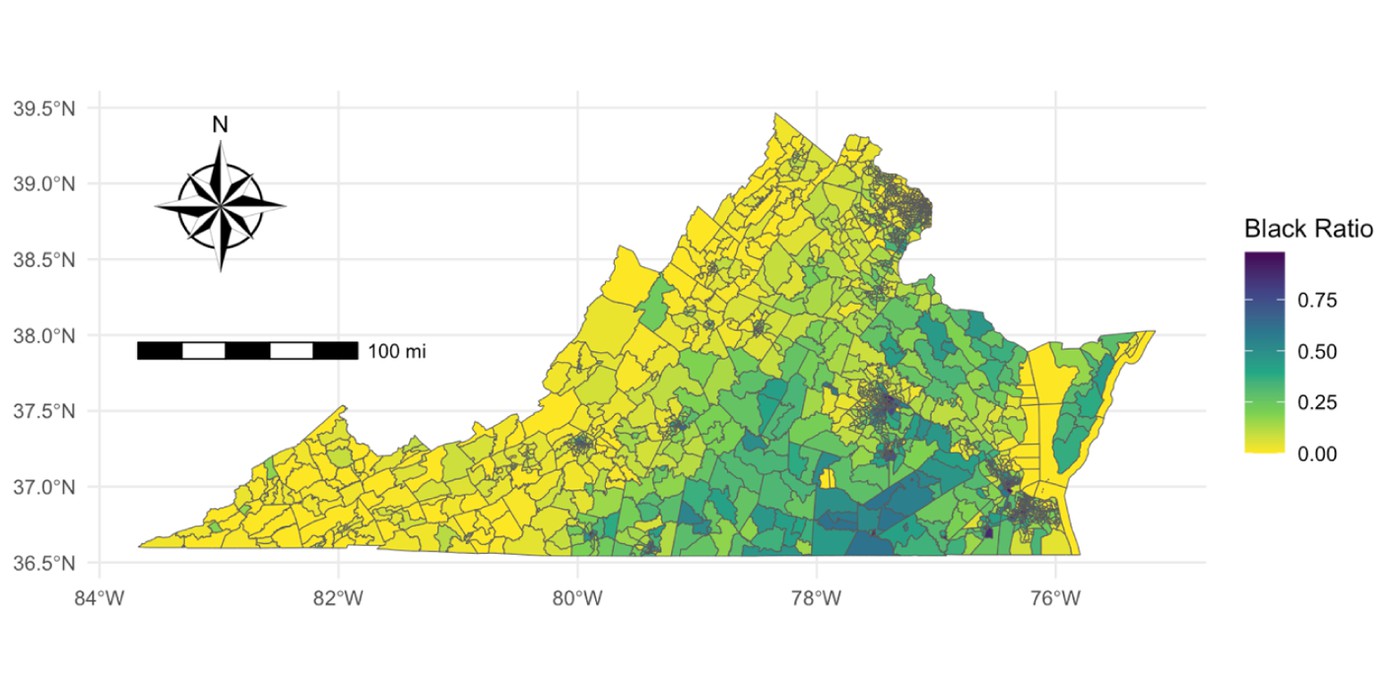
Zhai, G., Xie, K., Yang, D., & Yang, H. (2024). Developing equity-aware safety performance functions for identifying hotspots of pedestrian-involved crashes. Accident Analysis & Prevention, 207, 107759. doi
Wang, J., Cetin, M., Yang, H., Xie, K., Zhai, G., & Ishak, S. (2024). Improving effectiveness of the safety service patrol programs: A discrete event-based simulation approach. Transportation Research Record, 2678(8), 1-14.
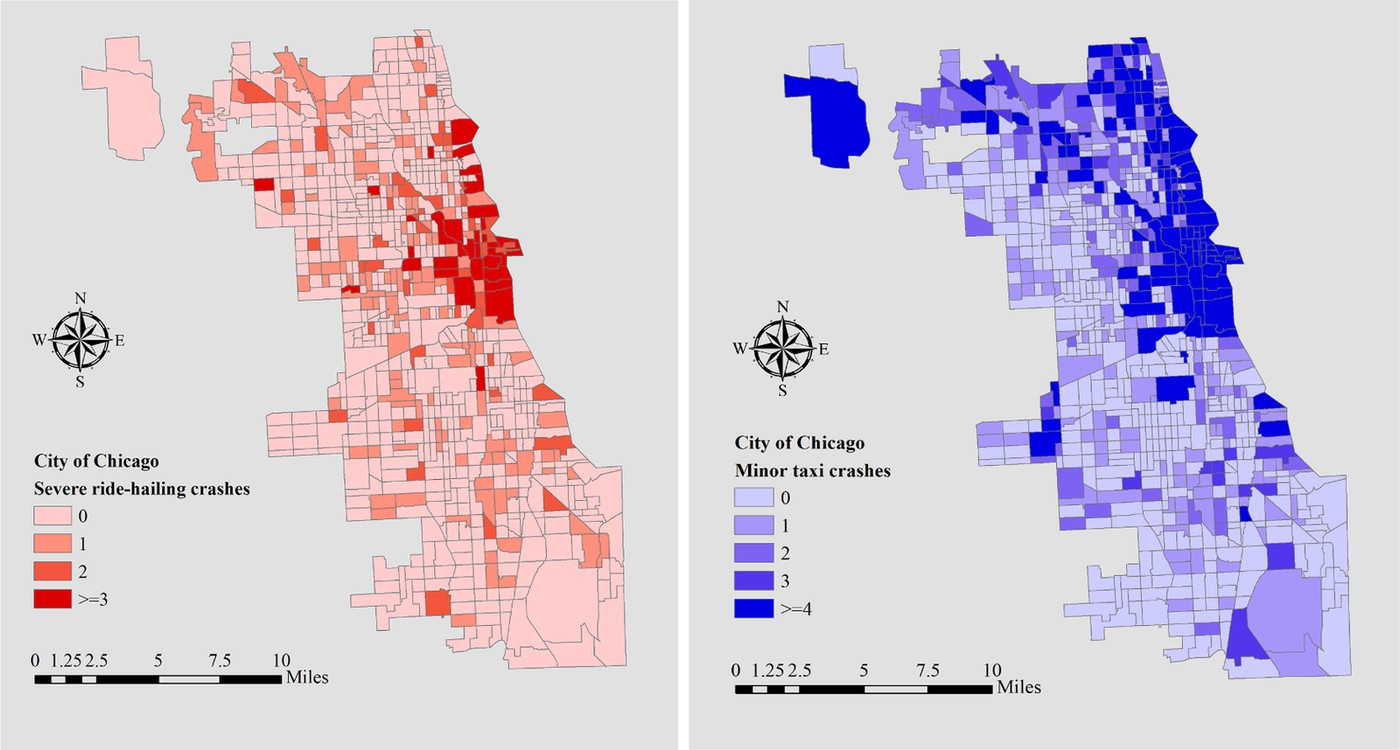
Zhai, G., Xie, K., Yang, H., & Yang, D. (2023). Are ride-hailing services safer than taxis? A multivariate spatial approach with accommodation of exposure uncertainty. Accident Analysis & Prevention, 193, 107281. doi
Yang, H., Luo, P., Li, C., & Zhai, G. (2023). Nonlinear effects of fare discounts and built environment on ridesplitting adoption rates. Transportation Research Part A: Policy and Practice, 169, 103577. doi
Yang, H., An, P., Wei, H., & Zhai, G. (2023). Unique in the metro system: The likelihood to re-identify a metro user with limited trajectory points. Physica A: Statistical Mechanics and Its Applications, 628, 129176.
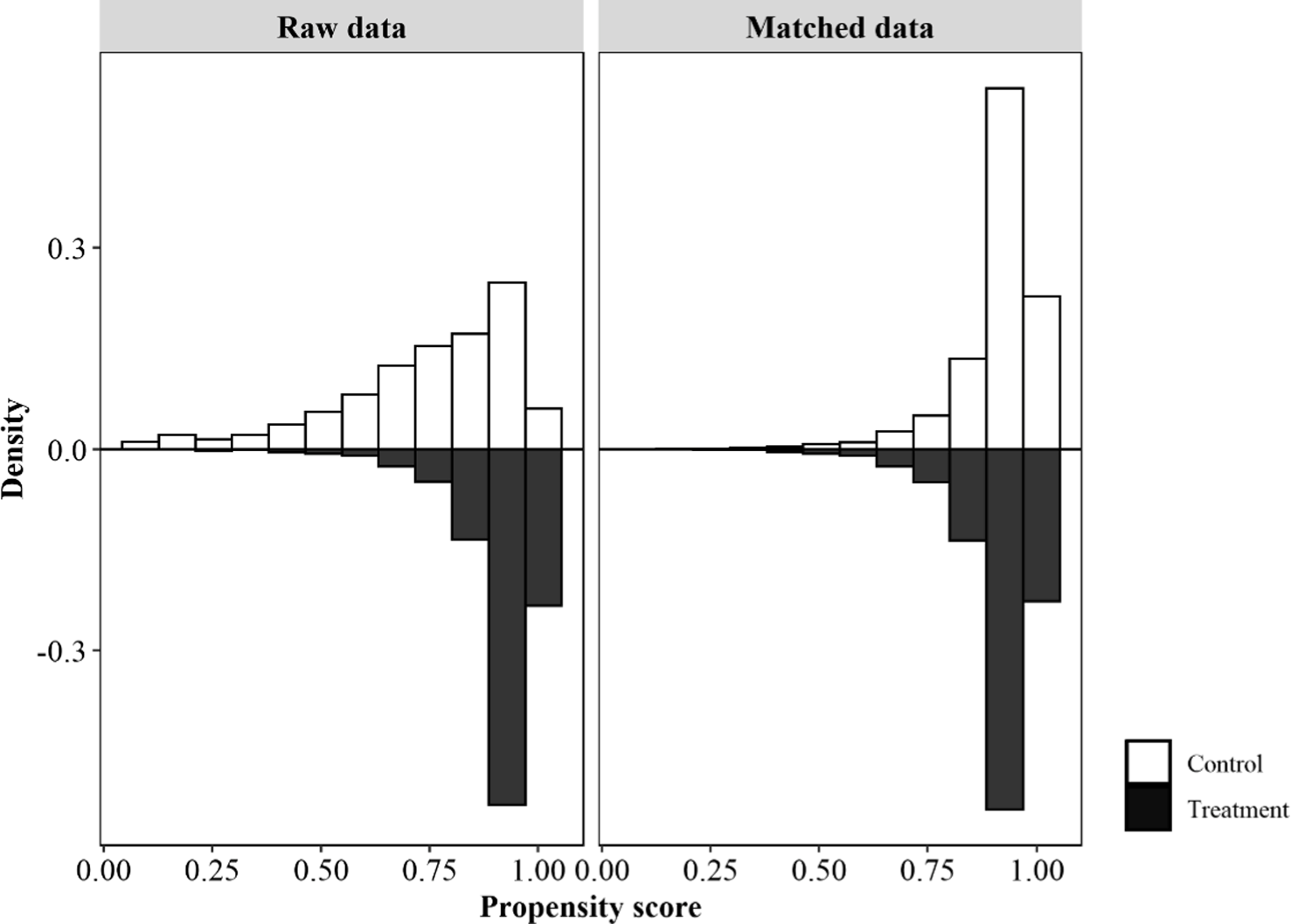
Zhai, G., Xie, K., Yang, D., & Yang, H. (2022). Assessing the safety effectiveness of citywide speed limit reduction: A causal inference approach integrating propensity score matching and spatial difference-in-differences. Transportation Research Part A: Policy and Practice, 157, 94-106. doi
Yang, H., Zhai, G., & Yang, L. (2022). How does the suspension of ride-sourcing affect the transportation system and environment? Transportation Research Part D: Transport and Environment, 102, 103131.
Zhang, Z., Zhai, G., Xie, K., & Xiao, F. (2022). Exploring the nonlinear effects of ridesharing on public transit usage: A case study of San Diego. Journal of Transport Geography, 104, 103449.
Yang, H., Zhai, G., Liu, X., Yang, L., Liu, Y., & Yuan, Q. (2022). Determinants of city-level private car ownership: Effects of vehicle regulation policies and relative prices. Transport Policy, 115, 40-48.
Zhai, G., & Yang, H. (2020). Is the front passenger seat always the “death seat”? An application of a hierarchical ordered probit model for occupant injury severity. International Journal of Injury Control and Safety Promotion, 27(4), 438-446.
Working papers
Pu, Q., Xie, K., Yang, H., & Zhai, G. A vision-and-knowledge enhanced large language model for generalizable pedestrian crossing behavior inference. Under review at Travel Behaviour and Society.
Zhai, G., Xie, K., Yang, D., & Yang, H. Do electric vehicles lead to more severe crashes? A doubly robust-based causal inference approach. Under review at Transportation Research Part A: Policy and Practice.
Zhai, G., Yang, H., Yang, Z., Chen, S., Jiang, L., & Khattak, A. J. Assessing the effects of congestion surcharge on taxi ridership: Disentangling spatial spillover, nonlinearity, and time trends. Under review at Transport Policy.
Research Funding
Selected grants as Principal Investigator; the full list is on the Research page.
- PI Causal Decision-Making for Safe Systems — Ministry of Education, Overseas Postdoctoral Talent Program, 2027–2029
- PI Causal Inference Approach to Missing-Not-at-Random Mechanism Identification and Collaborative Imputation in Crash Data — NSFC Young Scientists Fund, 2026–2028
- PI Causality-Driven Active Prevention and Control of Traffic Safety on Urban Expressways via Air–Ground Collaboration — Fundamental Research Funds for the Central Universities, 2026–2027
- Co-PI Digital Sisters: A Causally-Grounded Framework for Urban Mobility Knowledge Transfer in Data-Scarce Cities — National Natural Science Foundation of China, 2026–2027
Professional Service
- Guest Editor, Transportation Research Part D special issue on AI-Driven Behavioral Analytics for Sustainable Shared Mobility (2025–)
- Youth Editorial Board Member, Digital Transportation and Safety (2024–)
- Youth Editorial Board Member, Transportation Safety and Environment (2024–)
- 60+ peer reviews for TR Parts A–D, AAP, Safety Science, JTG, Transport Policy, Cities
Prospective Students
I am looking for self-motivated graduate students with backgrounds in transportation, computer science, mathematics, or statistics who are interested in causal inference, machine learning, and transportation safety/mobility. If interested, please email me at gzhai@swjtu.edu.cn with your CV and a brief statement of your research interests.